Exercising During Pregnancy: What Is Safe and What to Avoid?
Pregnancy is a period of enormous change, both emotional and physical. Women often wonder whether exercising during pregnancy is safe, which activities they should avoid entirely, and exactly how to adjust their fitness routine month by month. If you've just found out you're pregnant and you're scared to keep training, you're not alone.
As NEPPE (National Educational Program for Prenatal and Postnatal Fitness) certified specialists, our goal is to demystify this period. Science and medicine today are very clear: properly dosed physical activity is not only safe but extremely beneficial for the health of both mother and baby. Here's our detailed kinesiological guide to staying active, strong, and safe throughout your entire pregnancy.
1. Why exercise during pregnancy is medically recommended today
For a long time, the myth persisted that pregnant women should rest exclusively. Fortunately, modern medicine has abandoned that outdated approach. According to ACOG (American College of Obstetricians and Gynecologists) guidelines, healthy women with an uncomplicated pregnancy should accumulate at least 150 minutes of moderate aerobic activity and strength training per week.
If your pregnancy is uncomplicated and your gynecologist has given the green light, regular exercise is safe, and doctors actively recommend it.
The proven benefits of prenatal training
Scientific research consistently demonstrates the benefits of controlled exercise during pregnancy:
- Reduced back and pelvic pain: Up to 70% of pregnant women experience lower back pain due to a shifting center of gravity and the release of the hormone relaxin. Targeted strengthening of the core and glutes takes the load directly off your lumbar spine.
- Lower risk of gestational diabetes: Research published in the Journal of Clinical Endocrinology & Metabolism showed that moderate strength training significantly improves insulin sensitivity in pregnant women, reducing the risk of gestational diabetes by up to 50%.
- Weight gain control: Exercise helps maintain a healthy rate of weight gain, which indirectly reduces the risk of excessive birth weight (macrosomia).
- Physical preparation for labor: From a kinesiological standpoint, labor is a marathon: a physically demanding task that requires endurance, sustained strength, and breath control. Training builds exactly those components.
- Faster, safer postpartum recovery: Women who exercise during pregnancy (with an emphasis on preserving the diaphragm and pelvic floor) generally report an easier, faster return of function after birth. Read more about this in our detailed guide to postpartum recovery.
Curious what a safe program tailored exactly to you would look like? Rely on expert opinion, not guesswork. Fill out the MyFittio pregnancy questionnaire and let our NEPPE trainers build you a 1-on-1 training plan tailored to your week of pregnancy.
2. First trimester (weeks 1 to 13): listen to your body and build the habit
The first three months are often the most challenging. From the outside, there may not be much visible difference, but on the inside, your body is working "overtime" to build the placenta and your baby's vital organs.
What can you expect?
Extreme fatigue, sudden mood swings, and morning sickness are all completely normal. The biggest mistake you can make at this stage is "pushing through" the exhaustion. If you feel too drained on a given day, it's absolutely fine to skip a workout. Listen to your body.
What should you do at the gym or at home?
The focus of the first trimester shouldn't be pushing your hypertrophy limits, but creating or maintaining a fitness habit:
- Light to moderate walks: Fresh air helps enormously with easing nausea.
- Basic strength training: Keep your existing routine if you trained before pregnancy, but reduce your intensity (loads) to around 70% of your maximum capacity.
- Learning breathing mechanics: This is a critical time to learn diaphragmatic breathing. Controlling intra-abdominal pressure (IAP) during exercises will prevent major damage to the abdominal wall later in pregnancy. We've written extensively about core stabilization mechanics in our article: Why Kegels aren't enough.
3. What to absolutely avoid throughout pregnancy
While exercise is encouraged, certain movements, workouts, and sports should be cut from your routine for your safety and your baby's. ACOG guidelines are very clear here:
- High-risk activities for falls or trauma: Skiing, horseback riding, ice skating, gymnastics, and contact sports (judo, boxing, basketball) have no place in your prenatal schedule.
- Prolonged lying on your back (after week 16): Avoid exercises that require lying flat on your back for extended periods. Your uterus, now significantly heavier, can compress the inferior vena cava and reduce oxygenated blood flow to your heart and baby, causing dizziness (supine hypotensive syndrome).
- Traditional sit-ups/crunches: Classic sit-ups and exercises that create excessive, uncontrolled pressure on the front abdominal wall significantly increase the risk of severe diastasis recti (separation of the straight abdominal muscle). Focus instead on side planks, bird-dog exercises, and farmer's carries.
- Overheating (hyperthermia): Avoid hot yoga, workouts in unventilated or extremely hot rooms, and clothing that doesn't let your skin breathe. It's important to drink plenty of water before, during, and after exercise.
- The Valsalva maneuver: Holding your breath while lifting a heavy load creates dangerous pressure on the pelvic floor and blood vessels. The rule is: exhale on effort!
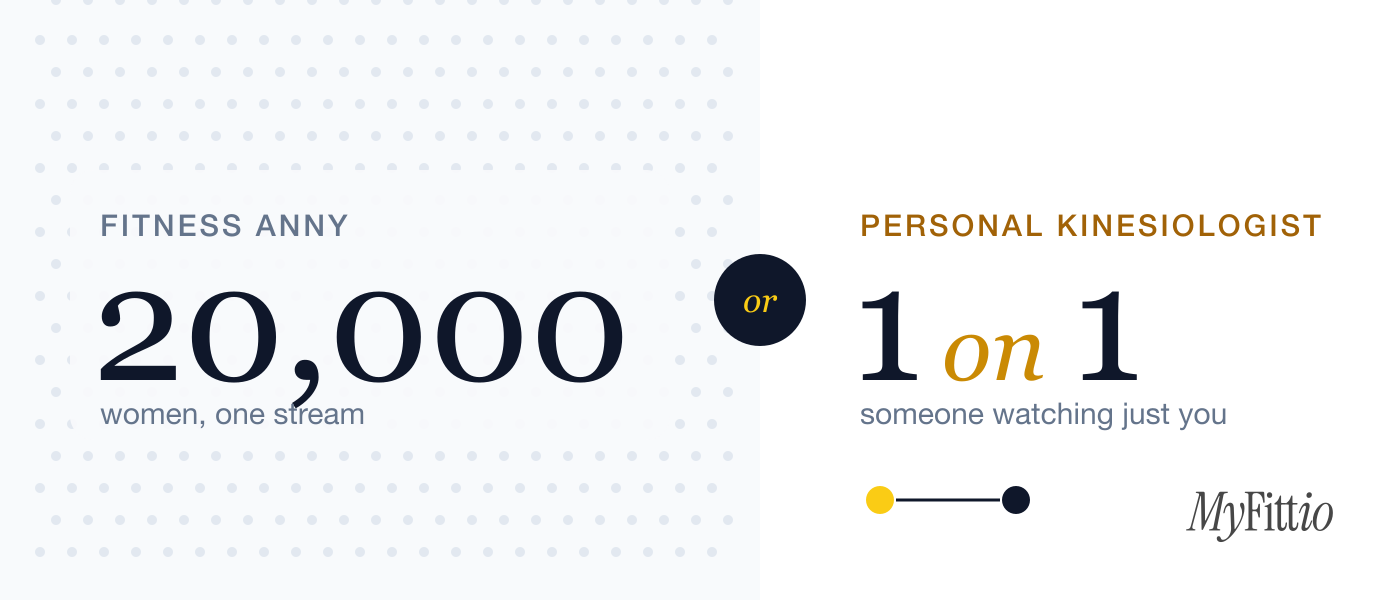
Training with an app that doesn't know you're pregnant? That can be dangerous! Generic apps generate plans without understanding anatomical changes. Read our analysis of why online personal trainers are a safer choice than pregnancy apps, or go straight ahead and start working with a MyFittio specialist.
4. Second trimester (weeks 14 to 27): the golden age of pregnancy
For most women, entering the second trimester marks a return of energy and the end of nausea. This is often called the "golden age" of pregnancy, and it's the ideal window to maximize strength training, with certain biomechanical modifications.
Adaptations are key
As your belly grows, your body goes through a dramatic shift in its center of gravity (your body's weight moves forward). This is the phase in which your training program has to grow and change along with your belly.
Your pelvic floor now bears much greater pressure from your baby's growth. At the same time, all your joints and ligaments become looser and more elastic thanks to high levels of the hormone relaxin. Relaxin's job is to "soften" your pelvis to prepare it for your baby's passage, but that means all your joints are more prone to sprains and dislocations.
Instead of deep asymmetric stretches and sudden movements, your focus shifts to:
- Stabilization training: Balance exercises with light support (like split squats and lunges holding onto something stable).
- The posterior chain: Strengthening your lats, glutes, and hamstrings so your body can counter the forward pull of your growing belly.
- Lifting weights with safe support: Using an incline bench for presses instead of a flat bench.
5. Third trimester (week 28 to birth): maintaining mobility and range
As you enter the home stretch of pregnancy, it's natural to feel fatigue, reduced lung capacity (as your baby pushes up on your diaphragm), and joint swelling.
The goal of training in the third trimester is absolutely not progressive overload. Your new goal is maintaining the tone you've built, reducing pain, and preserving your range of motion (mobility). We covered more detailed strategies for this period in a separate article on staying in shape in the third trimester.
This is where the crucial advantage of working with a NEPPE-certified trainer comes into play. We adjust your plan on a weekly basis: if at week 36 you feel strong pubic symphysis pain while walking, we immediately drop asymmetric movements (like lunges) and focus exclusively on bilateral exercises (a supported sumo squat, glute bridge, exercises on a Pilates ball).
Conclusion: investing in a healthier pregnancy and faster recovery
Every pregnancy is unique. What worked for your best friend or your favorite Instagram influencer very likely won't work the same way for you. Blindly following generic YouTube videos or standard fitness apps doesn't offer real safety, because those algorithms don't know your specific situation: they don't know whether you feel pelvic pressure, whether you're showing signs of diastasis, and they can't correct you if you're doing an exercise incorrectly.
Your body is currently doing the most incredible work in the world. It deserves expert, personalized guidance that takes care of the kinesiological mechanics of your core and joints, while you build a new life in comfort and safety.
Curious what a safe program tailored exactly to you would look like? By filling out the detailed MyFittio pregnancy questionnaire, you let our specialists assess your anatomical condition and build a 1:1 tailored training plan, which we'll adjust together on a weekly basis. Empower your pregnancy starting today!
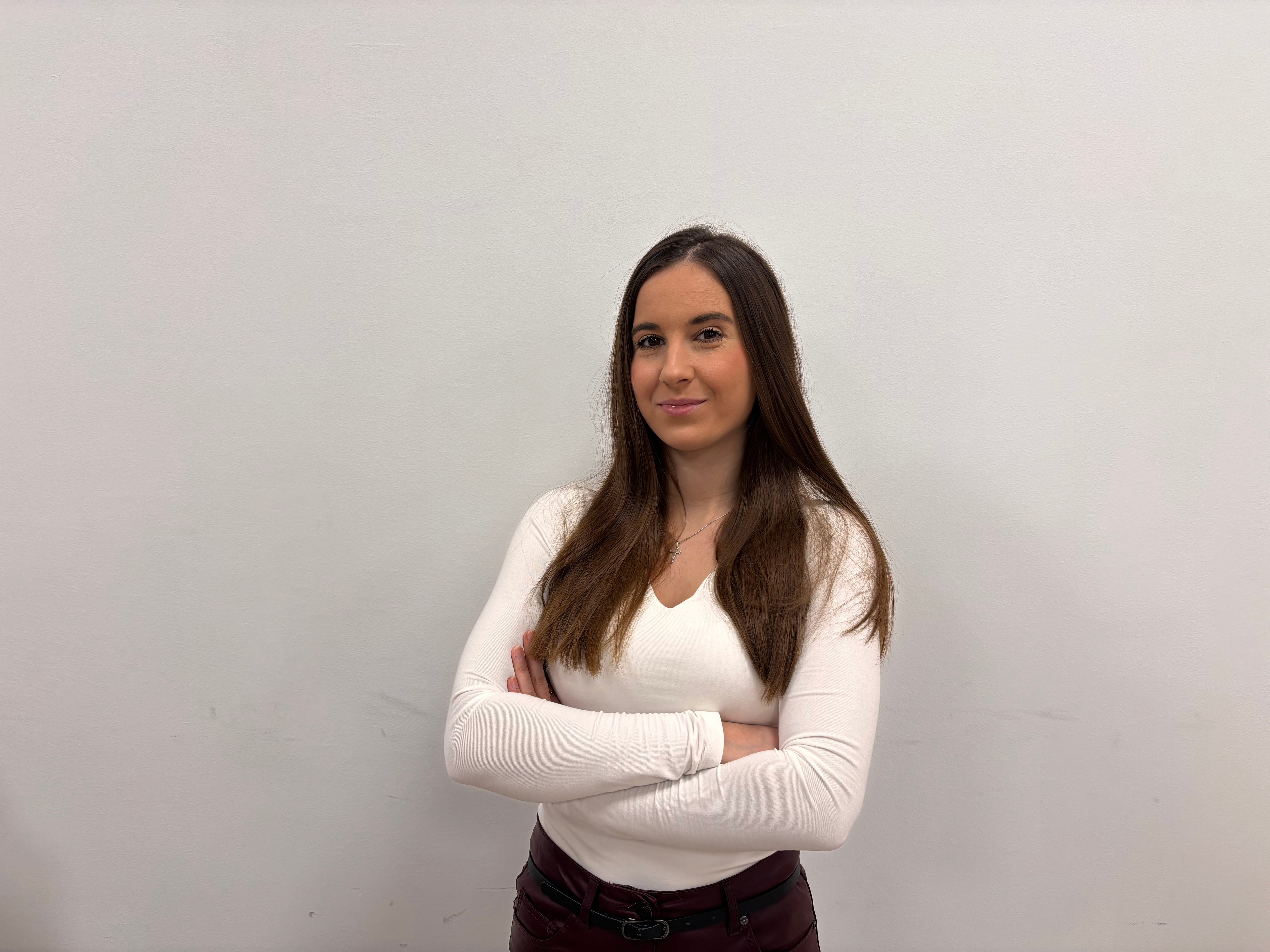
MyFittio Team
NEPPE Certified Kinesiologists
Expert team of kinesiologists specialized in prenatal and postnatal programs, and body transformations. Our mission is to provide safe, science-backed support through every step of your health journey.
You might also like
Pregnant, postpartum, diastasis or back pain: why most online programs do not want you, and what to do instead
There are 300 women on the stream. One of them is doing crunches with diastasis recti, and nobody knows.