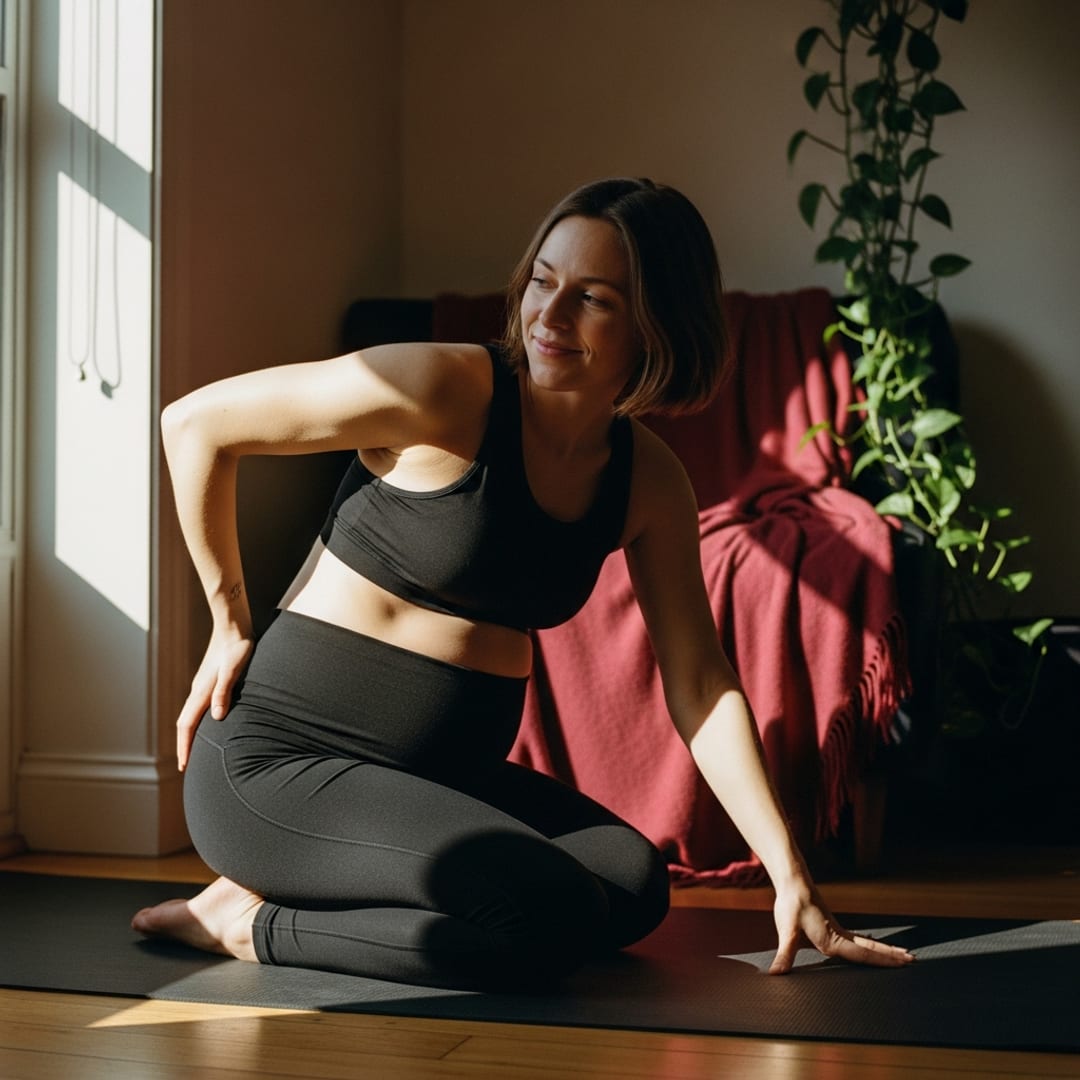
Exercising in the Second Trimester: The Golden Window for Training
If you have just stepped into your second trimester, you are probably feeling enormous relief. The morning sickness, exhaustion, and constant fatigue that marked the early weeks are gradually fading, replaced by a wave of new energy. Still, along with the first signs of a baby bump come new questions: how should you train now, which exercises are safe, and how do you adapt your movement to a body that is visibly changing week by week?
The second trimester (weeks 13 to 27 of pregnancy) is rightly called the "golden window" for physical activity in kinesiology. This is the ideal window to build strength, improve posture, and prepare your body for the growing demands of late pregnancy and labor itself. As certified kinesiologists, in this guide we bring you science-based guidance on how to make smart, safe use of these precious weeks.
Why is the second trimester the ideal time to train?
During the first 12 weeks, your body was working in "emergency mode" to build the placenta and lay the groundwork for your baby's development. That is why the first trimester is often reserved for reduced intensity and simply maintaining the habit of movement. But once you enter week 13, your hormonal picture stabilizes, and the risk of miscarriage drops significantly, which brings mental relief too.
During this period, your blood volume increases, which actually acts as a natural "cardio workout" and improves oxygen delivery. Your belly is not yet large enough to drastically limit your movement, and your joints are not yet under maximum load. Take advantage of this wave of energy for strength training. It will help you control gestational diabetes, reduce your risk of preeclampsia, and ease the back pain that often shows up as your baby grows.
How to safely progress and plan training in the second trimester
Many pregnant women hesitate to increase intensity, believing that during pregnancy they should only walk or do light stretching. The truth, according to guidelines from leading global gynecological associations like ACOG (American College of Obstetricians and Gynecologists), is quite different. If your pregnancy is uncomplicated and you have your gynecologist's approval, loaded training is not only safe but highly recommended.
Moving from caution to smart progress
While in the first trimester you may have skipped workouts because of nausea, now you can introduce structured strength training. Focus on progressive overload, but within clear limits. That means you can use dumbbells, resistance bands, or bodyweight to stimulate your muscles, but without training to complete failure.
If you want a deeper understanding of how training is generally structured across the whole of pregnancy, read our complete guide to exercising during pregnancy. The key is to feel comfortably tired and energized after every workout, not completely drained.
The talk test and heat regulation
The easiest way to track exercise intensity is the so-called "talk test." During exercise, you should be able to say a full sentence without gasping for air. If you become so breathless you cannot speak, the intensity is too high.
Also pay attention to thermoregulation. Although your body is more efficient at cooling in the second trimester than in the first, you should still avoid exercising in stuffy, overheated rooms, and always keep a water bottle with you. Dehydration can cause premature contractions and dizziness.
Anatomical challenges: what to watch for after week 16
As your baby grows, so does your body's anatomy change. During this period, we need to introduce a few key modifications to protect your health and your baby's.
Caution with lying on your back (supine position)
After around week 16 of pregnancy, the weight of the uterus and fetus becomes large enough that lying flat on your back can compress the inferior vena cava. This large vein returns blood from the lower body to the heart.
When compressed, it can cause a sudden drop in blood pressure (supine hypotensive syndrome), which you will feel as dizziness, nausea, or general weakness. To avoid this, modify any exercise normally done lying on your back (like chest presses or certain core exercises):
- Use an adjustable bench set to a 30–45 degree incline.
- Exercise lying on your side.
- Perform exercises in a half-kneeling or standing position.
Shifting center of gravity and the effect of relaxin
During the second trimester, your body's center of gravity shifts forward and upward. To compensate for this shift, your body naturally tends to increase lumbar lordosis (an exaggerated curve in your lower back), which can strain your spine.
On top of that, the hormone relaxin, which prepares your pelvis for birth, softens your ligaments and joints. This makes you more flexible, but also more prone to injury if your joints are not stabilized by your muscles. So avoid sudden changes of direction, jumps, and exercises that require extreme single-leg balance without support.
Round ligament pain
You may feel a sharp, brief pain in your lower belly or groin during squats or sudden movements. This is the stretching of the round ligaments that support your uterus. It is harmless but can be uncomfortable. If you feel this pain, slow down, reduce the depth of the movement, and focus on stabilizing your pelvis before beginning the exercise.
Core training: how to exercise with a growing belly?
Forget classic sit-ups, leg raises, and loaded torso rotations. As your abdominal wall stretches to make room for your baby, your straight abdominal muscle (rectus abdominis) naturally separates along the midline (linea alba). Doing sit-ups in this state creates too much outward pressure, which can worsen diastasis and weaken connective tissue.
Instead, your goal should be activating the deep abdominal muscle (transversus abdominis), which acts like a natural corset.
- Proper breathing: With every effort (for example, rising from a squat or pressing a weight), actively exhale and gently draw the lower belly inward and up. This is called "hugging the baby" and helps maintain core stability.
- The pelvic floor: Your deep core muscles work in synergy with your pelvic floor. Integrating conscious release and gentle lifting of your pelvic floor muscles during your breath is key to preventing incontinence. To learn how to properly activate these muscles, read our article on how to properly train your pelvic floor.
To help you get through this dynamic period safely, without guesswork or fear, we built a personalized support system. Our kinesiologists tailor every movement to your week of pregnancy and current condition. Fill out a short questionnaire on the MyFittio quiz to find out what your ideal training plan should look like.
Here is where this trimester sits in the whole pregnancy:

Best exercises in the second trimester: what to include in your routine
When planning exercises for the second trimester, focus on functional movements that make everyday life easier and prepare you for carrying your baby.
- Box squats: An excellent exercise for strengthening the glutes and quads. Using a box or stable chair provides safety in case you lose your balance, and teaches you how to sit down properly without overloading your knees.
- Single-arm supported bent-over row: Strengthening your upper back is key to counteracting the pull of growing breasts and belly on your shoulders. Supporting yourself on a bench with one hand and one knee takes the load off your lower back.
- Incline push-ups: Instead of on the floor, do push-ups with your hands elevated (bench, stable table, or wall). This reduces pressure on your abdominal wall while still effectively strengthening your chest and shoulders.
- Incline glute bridge: Lie so your upper back and shoulders rest on a bench or couch, feet on the floor. Lifting your hips strengthens your posterior chain without the risk of pressure on the large vein.
⚠️ When to stop training immediately and call your doctor
While exercise is extremely beneficial, your body always has the final say. Stop training immediately and contact your gynecologist if you notice any of the following symptoms:
- Vaginal bleeding or amniotic fluid leakage.
- Dizziness, weakness, or feeling faint that does not go away after resting.
- Chest pain, shortness of breath before starting activity, or heart palpitations.
- Painful, rhythmic uterine contractions (more than 6 to 8 in an hour).
- Swelling, pain, or redness in your calves (which may indicate a blood clot).
Frequently asked questions about exercising from week 13 to 27 of pregnancy
Can I still run in the second trimester?
If you ran before pregnancy, your pregnancy is uncomplicated, and you have no pelvic pain, running early in the second trimester can be safe. As your belly grows, however, the pull of gravity and the effect of relaxin place a heavy load on your joints and pelvic floor. If you feel pelvic pressure, urine leakage, or hip pain, it is time to swap running for brisk walking, a stationary bike, or swimming.
Can I lift heavier weights than in the first trimester?
Since you generally feel much better in the second trimester, it is natural to want to increase your weights. That is allowed, provided you do not use breath-holding (the Valsalva maneuver), which suddenly raises blood pressure and intra-abdominal pressure. Stick to loads you can lift for 10 to 12 reps with proper technique and controlled breathing.
What should I do if my belly physically gets in the way during exercises?
That is completely normal and expected. For exercises like squats or deadlifts, simply widen your stance (a sumo stance) to make room for your belly. For rowing exercises on machines, pull the bar or handles a bit higher, toward your lower chest instead of your belly button.
How do I prepare for what the third trimester brings?
As the second trimester winds down, you will gradually feel your body becoming heavier and slower again. That is a sign to gradually reduce training intensity and focus more on pelvic mobility and breathing exercises. To know exactly what awaits you in the final stage, read our guide to the third trimester.
Stay active and listen to your body
Exercising from week 13 to 27 of pregnancy gives you a unique opportunity to build a base of strength that will make not only the remaining months of pregnancy easier, but also your recovery after birth faster. Every pregnancy is its own story, so do not compare your progress to anyone else's. Listen to the signals your body sends, adapt your exercises to the week you are in, and enjoy this beautiful, active period.

MyFittio Team
NEPPE Certified Kinesiologists
Expert team of kinesiologists specialized in prenatal and postnatal programs, and body transformations. Our mission is to provide safe, science-backed support through every step of your health journey.
You might also like
Pregnant, postpartum, diastasis or back pain: why most online programs do not want you, and what to do instead
There are 300 women on the stream. One of them is doing crunches with diastasis recti, and nobody knows.