Pregnant, postpartum, diastasis or back pain: why most online programs do not want you, and what to do instead
There is a sentence you will find, in some form, in the terms of almost every large group online program. It goes roughly like this:
We do not work with women who have more serious health problems, because the program is delivered online and we have no possibility of direct contact.
Most women skip past that sentence, because it does not apply to them. This article is for the ones it does apply to.
If you are pregnant. If you gave birth six weeks ago, or six months ago. If you have a diastasis you found with your own fingers or a physiotherapist confirmed. If you leak urine when you cough or jump. If your back has hurt for long enough that you have stopped counting. If you have a hernia, endometriosis, PCOS, an underactive thyroid, or anything else that puts you in the "more serious" box.
That sentence is about you. And before we say anything about what to do, something unexpected needs saying first.
That sentence is fair
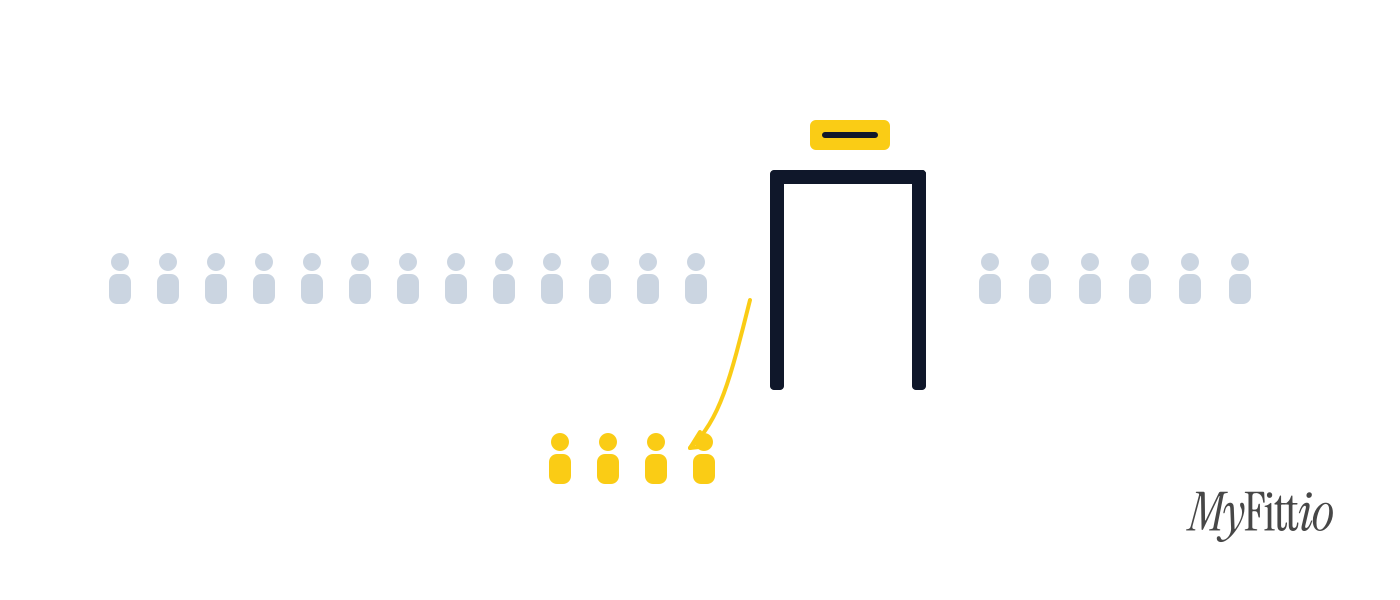
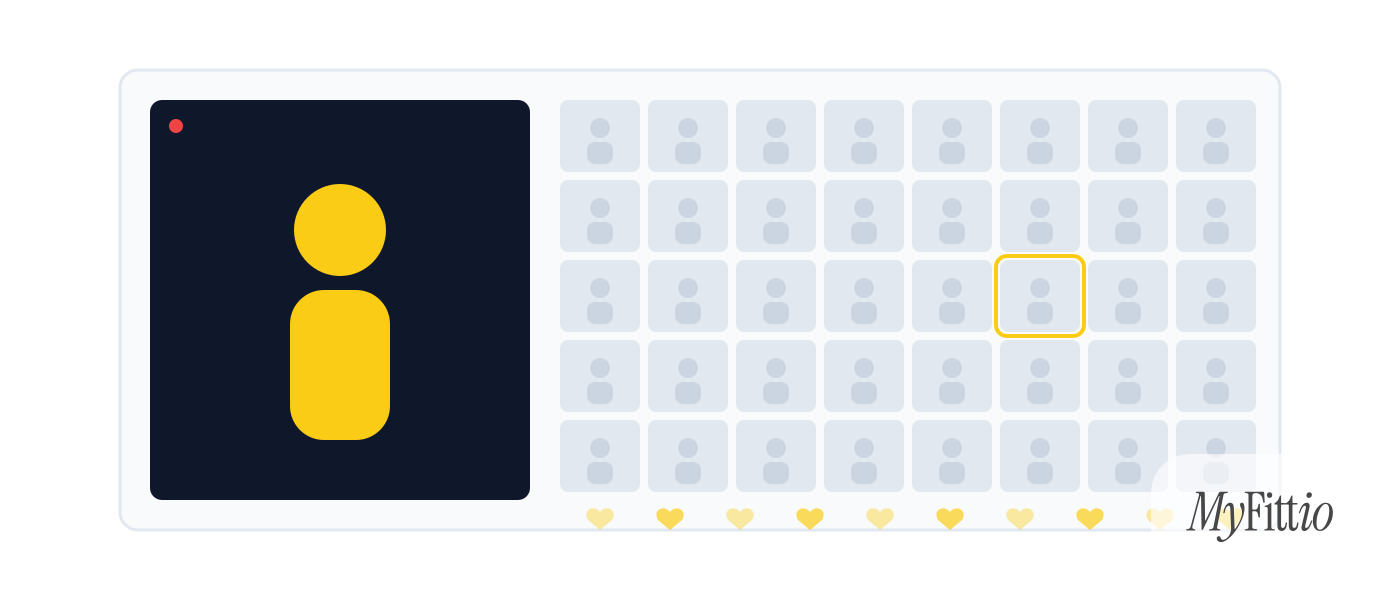
A group online program is one camera and hundreds of people. The coach sees the camera, not you. In that format, a woman with a prolapse doing jumps, or a woman three months after a C-section doing a plank, is not a "challenge" but a risk that nobody on the other side of the screen can see or stop.
A program that knows this and writes it into its terms is doing the responsible thing. A program that does not write it, and takes your money anyway, is doing something else.
So do not be angry at the sentence. It is correct. The only question is where you go when it excludes you.
The three places you usually end up
When that sentence rules you out, the path usually looks like this:
YouTube. Free, available, and completely blind. A "diastasis exercises" video with two million views does not know whether your gap is two centimeters or five (roughly one inch or two), or whether the tissue is taut or sinks under your fingers. You do the best you can, and sometimes that is enough. More often it is not.
"I'll just walk." Walking is excellent and we do not want you to stop. But walking does not fix a diastasis, does not teach the pelvic floor to work with your breathing, and does not rebuild the strength you need to lift a twelve-kilo (26 lb) child three times a day. It is a postponement, not a plan.
A physiotherapist. This is the best of the three options, and if you are there, you are in good hands. The limit is practical: five to ten sessions, at €40 to €60 each, at times that rarely line up with a baby. When the therapy ends you get a sheet of paper with exercises and the question "now what?"
None of the three options is bad. None of them is a program.
What actually has to be checked before the first exercise
Here is the part a group format cannot do, and it is the whole difference.
Before a woman with any of the above gets her first exercise, somebody has to know the following:

How the birth went, if there was one. Vaginal or C-section. With an episiotomy, with a tear, without. How many weeks have passed. Whether the gynecologist gave clearance, and for what exactly.
What the symptoms are, and when they appear. Leaking urine when coughing, jumping, lifting. A feeling of pressure or heaviness bearing down. Pain, and where. Doming down the middle of the belly when getting out of bed.
What the abdominal wall does under load. There is a simple test you can do at home, but somebody has to read its result. The width of the gap matters less than whether your fingers sink in or meet resistance.
What has already been tried. Which exercises, for how long, and what happened. A woman who has done four months of planks with a diastasis has a different starting point from one who has done nothing.
Only then is the plan written. And only then is the plan worth anything, because it was written for one body, not for an average.
What a program that takes you on looks like
We do not want to turn this into an advertisement, so we will describe what any program for women in this group should have. If you find it somewhere else, take it.
A person, not a camera. A kinesiologist who assessed you (through a questionnaire and a conversation), wrote the plan, and who you message when something hurts. A reply the same day, not at the end of the month.
Phases, not difficulty levels. For postpartum that means: breathing and deep core activation first, without a single crunch or plank, and only then strength. For pregnancy: a plan that changes with the trimester, not the same stream for week 14 and week 34. For back pain: first why it hurts, and only then what to do.

A symptom rule that is actually enforced. If leaking, pressure, pain or doming shows up during an exercise, the exercise changes that week. Not "skip that one", but "do this one instead, and send me a video".
Somebody who notices you are gone. Women in this group quit more often than others, because the start is slower and the scale is not the measure. Accountability to one person is not a luxury here; it is the only reason the plan survives month two.
Where we fit into this story
MyFittio works with exactly this group. The kinesiologists we work with specialize in prenatal and postnatal training, and we write for the women that a group program, YouTube, or a physiotherapist's sheet of paper left with the question "now what?"
We do not take everyone. If you have an acute injury or a condition that needs a doctor, you go to the doctor first, and we will tell you so. But "pregnant", "just gave birth", "diastasis", "leaking" and "my back hurts" are not reasons for exclusion. They are the reasons we exist.
If you are pregnant or recently gave birth, here is how we work with pregnant women and new mothers. For everything else, the first plan is free, and a kinesiologist writes it after asking you everything listed above.
To finish, the same sentence, read differently
"We do not work with women who have more serious health problems because we have no possibility of direct contact."
The first time you read it, it sounds like a door closing. The second time, you notice it actually says something else: this format is not for you, because it cannot see you.
That is true. So find a format that can.
MyFittio Team
NEPPE Certified Kinesiologists
Expert team of kinesiologists specialized in prenatal and postnatal programs, and body transformations. Our mission is to provide safe, science-backed support through every step of your health journey.
Your body is more complex than any calculator
A certified kinesiologist analyzes your unique situation and builds a program that actually works for your body type, lifestyle, and goals.
30-day money-back guarantee
You might also like
There are 300 women on the stream. One of them is doing crunches with diastasis recti, and nobody knows.
Fitness Anny has over 20,000 women. Here is when that is an advantage, and when it is not.