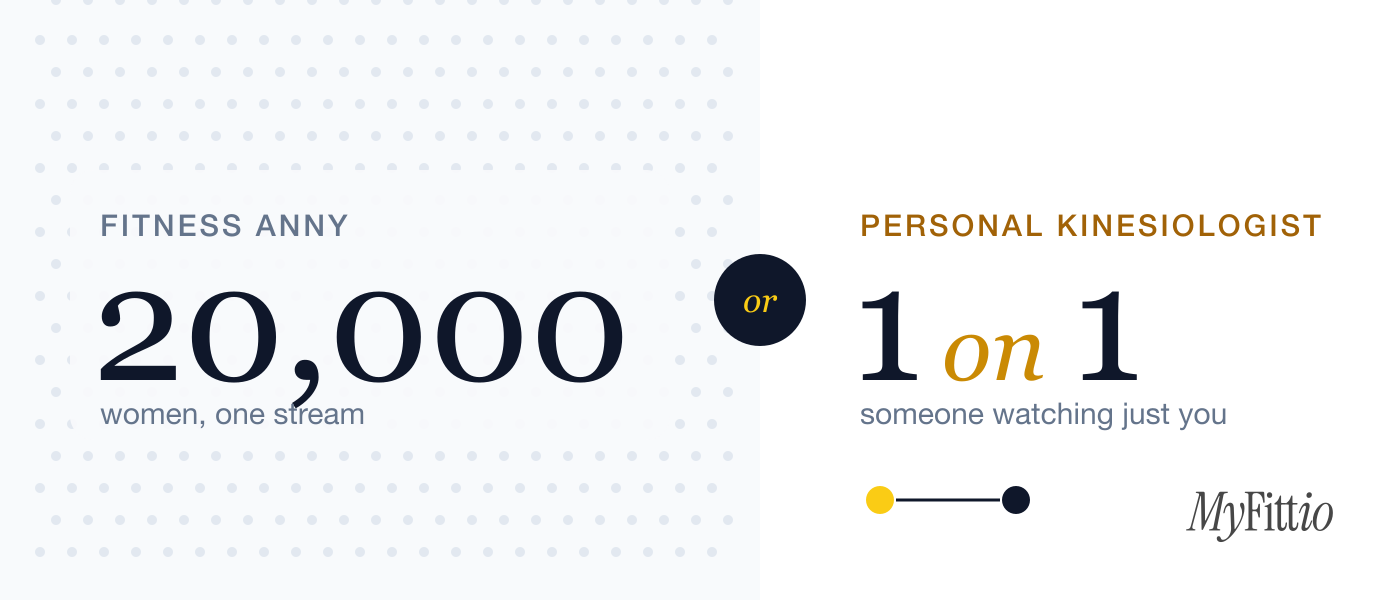
Fitness Anny has over 20,000 women. Here is when that is an advantage, and when it is not.
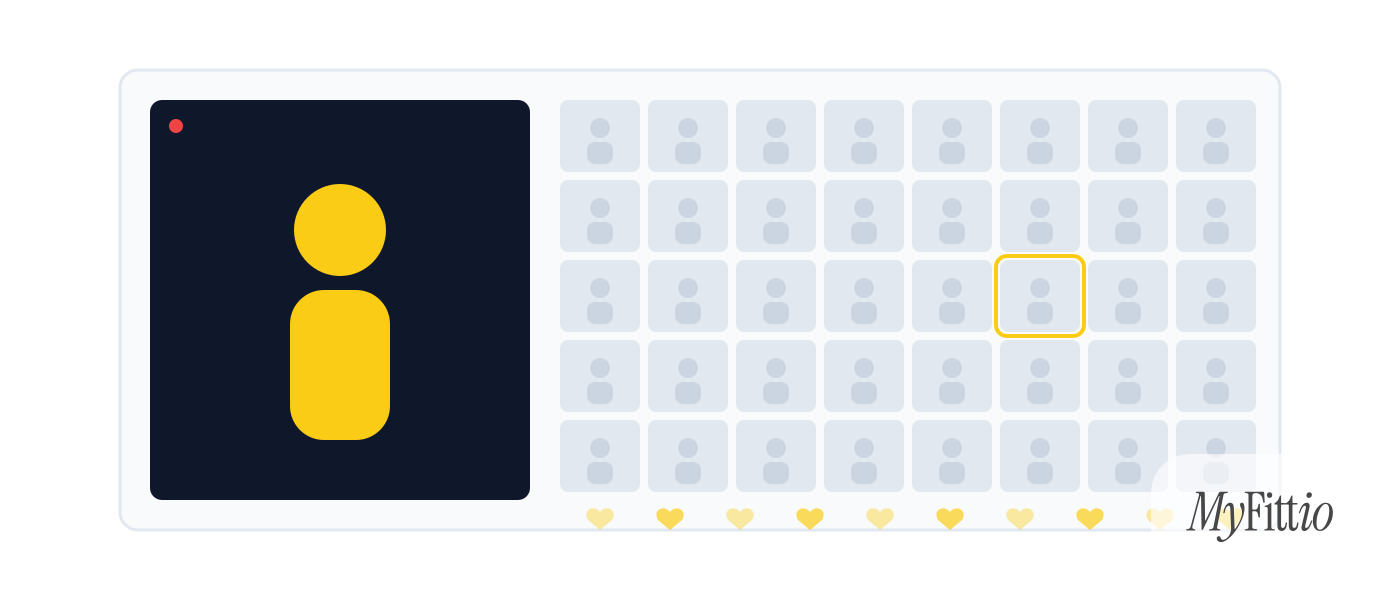
Somewhere between Ljubuški and Zagreb, at the same moment, a few hundred women press play on a stream. Same coach, same greeting, same first warm-up move. Hearts scroll up the chat. The workout lasts 45 minutes, and for most of them it is the only part of the day that belongs to them alone.
That is Fitness Anny. And before we say anything else, one thing has to be said without qualification: what Ilijana Bodlović has built is serious.
Over 20,000 women in the program. More than 90 collaborators: coaches, nutritionists, psychologists, a gynecologist. All of it run from Herzegovina, almost entirely online, started with 80 women in a gym hall in Grude.
If you are choosing between a group program and a personal kinesiologist, the question "why would I pay more when she is cheaper?" is completely fair. So here is the answer we would give any woman who asks it. Including the parts where she wins.
Why it works
If you are wondering why 20,000 women pay for something that is, on paper, a video workout, the answer is simple: because it is simple.
A fixed time slot. A live person on the other side of the screen who calls you by name in the chat. Hundreds of other women doing the same thing you are, at the same moment. A motivation group where somebody posts a "before and after" every single day. A basic package at €21 a month, less than one hour with a personal trainer at a gym.
That is not a trick. It is a well-designed product for a specific problem: a woman who knows what she should be doing but is not doing it, because she has no structure and no company. A group stream solves both at once. For a great many women that is exactly what they needed, and the results they post are real.
If we denied that, you should not trust the rest of this article either.
Where the format hits its ceiling
Now the part that does not make it into the transformation posts.
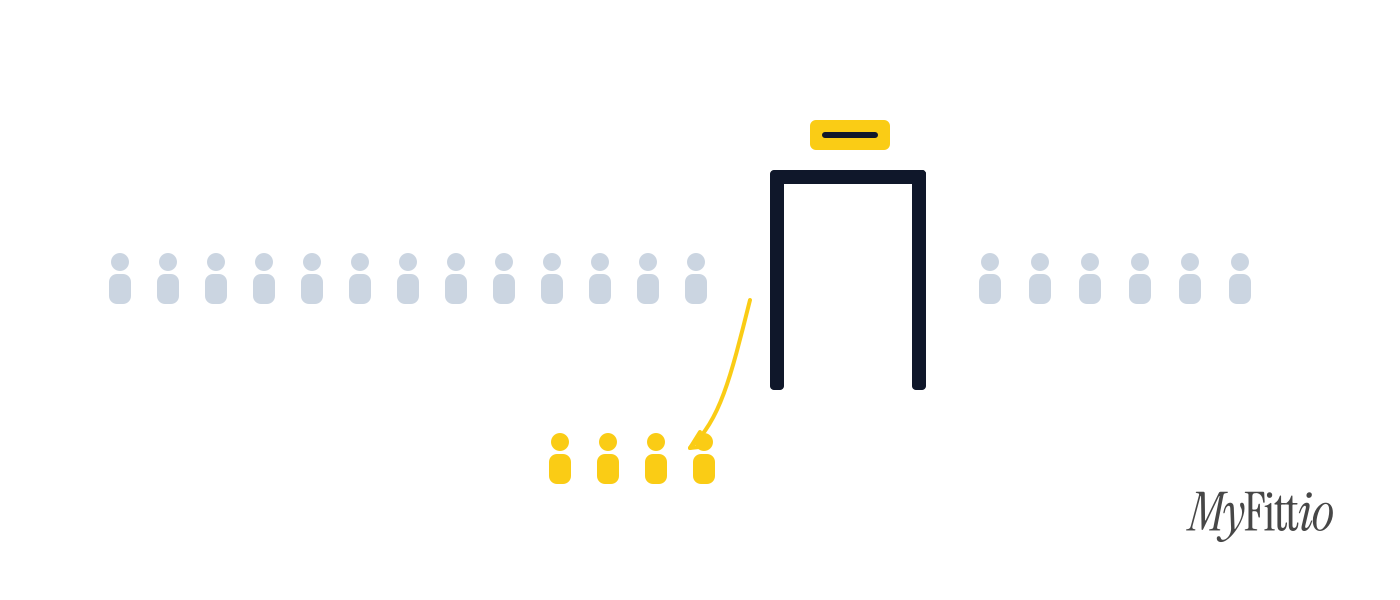
A stream is a stream. The camera films the coach, not you. When 300 women squat at the same time, one of them has a knee caving inward, one is breathing the wrong way round, one holds her breath on every rep, and one has a diastasis she does not know about, with the middle of her belly doming into a cone on every crunch. All four get the same "well done, girls" in the chat.
Not because the coach does not care. Because it is physically impossible to see.

In a group format there are three moments when this starts to show:
When something hurts. Back, knee, wrist. In a group the answer is "skip that exercise" or "go easier". That is an answer that protects the coach, not you. Nobody knows why it hurts, so nobody can tell you what to do instead.
When you are pregnant or have just given birth. A pregnancy program exists, in the Premium package. But it is still a stream, still a group, still the same plan for a woman at 14 weeks and a woman at 34. Exercising in pregnancy is not dangerous; we have written about that in detail. What is dangerous is exercising wrong with nobody noticing, and after birth it becomes a question of pelvic floor and abdominal wall, not kilograms.
When it stalls in month four. The first three months come off easily. Then the body adapts, the scale stops, and the stream is still the same stream. This is where most women either make peace with it or leave. They rarely get a diagnosis of what actually happened.
A limit they admit themselves
On their own website, in the FAQ section, Fitness Anny writes (our translation): "we do not work with women who have serious health problems, because our program is delivered online and we have no possibility of direct contact".
We say this without irony: that is a responsible sentence. A group program cannot safely coach a woman with a herniated disc, with a prolapse, three months after a C-section. If you cannot monitor it, you should not take it on. They know that and say it out loud, which is more than most write down.
But then a question opens up: where do those women go?
The short answer to that question is the whole of MyFittio.
What a personal kinesiologist actually does
It would be easy here to write "our trainers are kinesiologists with a five-year university degree, and Ilijana is a fitness instructor with an EQF level 3 certificate" and stop. That is accurate, but as an argument it is weak. With that certificate she has built more than most kinesiologists we know. A degree does not watch your squat. A person does.
So here is what actually differs, in the order you experience it:
Before the first exercise, somebody assesses you. Not a medical exam, but a questionnaire plus a conversation: injury history, pregnancy, birth if there was one, symptoms such as leaking urine under strain, pain, pressure. The program is not written until that is known. In a group it is never known.
The plan is yours, and it changes. Not "personalized" in the sense of picking a package, but written for one person, with your schedule, your equipment and your knee. If something is off on Tuesday, the plan changes on Tuesday, not at the end of the month.
Somebody notices you are gone. And here we get to motivation, because this is where people most often misunderstand us.
Two kinds of motivation
The usual story goes: the group gives motivation, the personal trainer gives expertise. That is not true, or at least not the whole truth.
The group gives energy. A live stream, 300 women, a chat on fire. That is real and it works, especially in the first few weeks.
A personal trainer gives accountability. Not to an abstract community, but to one person who knows your name, knows your plan, and on Wednesday morning sees that Tuesday did not get done. And asks. If the reason is real (a sick child, a night shift), the plan adjusts. If it is not, there is a gentle nudge and a question about what got in the way.
The difference between those two mechanisms is not which one is stronger at the start. It is which one is still there after month three, when the novelty has worn off and the streams start getting skipped. The group motivates you while you are on the stream. A trainer motivates you when you are not.
Nobody on the stream knows you skipped Tuesday. Your trainer does.
The price, and what you actually get for it
On their website Fitness Anny costs €21, €31 or €51 a month. MyFittio is €29, €59 or €89. The numbers are close, but you are not buying the same thing, so let us be precise about what ours includes.
€29 is our cheapest plan, and it is only fair to say up front that there is no personal program at this level yet: you get a library of ready-made programs, video instructions for every exercise, progress tracking in the app, and one consultation with a trainer a month.
€59 is the plan where a kinesiologist writes the program for you, adjusts it every week according to your progress, and checks in with you weekly, by call or by message. This is where what this article is about begins.
€89 is the plan where the trainer is with you during the workout itself: a video call, live technique correction, and video analysis of your form.
And let us clear up that sentence about the squat, because it is easy to read it wrong. A kinesiologist does not stand over you around the clock. On the €59 plan it means you send questions and clips through the app, and the plan changes the week something is off. On the €89 plan it means they watch you live while you do the set and correct you in the moment. If you expect a video call on every workout for €29, better to find that out now than after you have paid.
For comparison, a personal trainer in a Zagreb gym charges about €25 an hour and sees you twice a week if you are persistent. In most Western cities, multiply that by two or three.
None of this means our price is "better". It means you are not paying for the same thing. One price buys a place in a group. The other buys a person who answers when you need one.
Who each one is for
If we had to draw it, it would look like this:

Fitness Anny is probably the better choice if:
- you are healthy, not pregnant, and have no injury that follows you around
- the energy of a group carries you, and a fixed time slot helps
- your goal is weight and general tone, with no specific requirements
- you want the cheapest way to have a live person on the other side of the screen
A personal kinesiologist is probably the better choice if:
- you are pregnant, or gave birth within the last year
- you have diastasis, pelvic floor problems, back or knee pain
- you have already been in a group program and stalled in month four
- you need someone who will notice you have been gone for three days, not someone who calls your name in a chat
If you recognize yourself in the first list, honestly, go there. We will not hold it against you.
If you recognize yourself in the second, that is what we do. If you are pregnant or recently gave birth, here is how we work with pregnant and postpartum women. For everything else, the first plan is free, and you write it with a kinesiologist, not an algorithm.
One note to finish
Nothing in this article was written to diminish anyone. Fitness Anny is proof that women in this region want to train, want to pay for it, and want somebody to guide them. That is a market she did not just capture but partly created.
We work with the part of that market which a group stream, by its own admission, cannot take. These are not competing products. They are two different women with two different questions. The only thing that matters is knowing which one you are.

MyFittio Team
NEPPE Certified Kinesiologists
Expert team of kinesiologists specialized in prenatal and postnatal programs, and body transformations. Our mission is to provide safe, science-backed support through every step of your health journey.
Your body is more complex than any calculator
A certified kinesiologist analyzes your unique situation and builds a program that actually works for your body type, lifestyle, and goals.
30-day money-back guarantee
You might also like
Pregnant, postpartum, diastasis or back pain: why most online programs do not want you, and what to do instead
There are 300 women on the stream. One of them is doing crunches with diastasis recti, and nobody knows.